
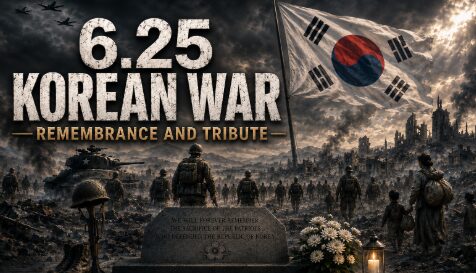
On June 25, 1950, before dawn broke over the Korean Peninsula, war began with North Korea’s sudden invasion of the South. What followed became one of the greatest tragedies in Korean history—an event that destroyed homes, separated families, and shaped the future of modern Korea in ways still felt today.
Remembering the War That Shaped Modern Korea
The Korean War, often called the June 25 War in South Korea, began with shock and fear. Cities and villages were quickly turned into battlefields, and ordinary people found their lives overturned overnight. Many lost their homes, children were unable to attend school, and countless families fled with only what they could carry.
One of the deepest wounds left by the war was the separation of families. Around four million Koreans became separated from parents, siblings, spouses, and relatives. Many have lived their entire lives without knowing whether their loved ones survived, waiting and hoping for reunification or even one final meeting.
The war did not end with a peace treaty, but with an armistice in 1953. Because of this, the Korean Peninsula remains technically divided by an unfinished war. In world history, the Korean War also became a major turning point of the Cold War, drawing in many nations and leaving a lasting impact far beyond Korea.
Sacrifice, Division, and the Rise of a Nation
South Korea was able to remain a free democratic nation because of enormous sacrifice. Korean soldiers, civilians, and countless ordinary citizens endured suffering to defend their country. Their courage became part of the foundation on which the Republic of Korea would rebuild.
The Korean War was not only Korea’s war. The United Nations decided to support South Korea, and countries including the United States, the United Kingdom, Canada, Türkiye, Australia, Thailand, and many others sent troops or medical aid. In total, 22 nations took part in combat or humanitarian support, and more than 40,000 young people from foreign lands never returned home.
Today, South Korea has grown from the ruins of war into one of the world’s leading economies. It is influential in semiconductors, artificial intelligence, cultural content, sports, and many other fields. But this success did not happen by chance; it was built through the hard work of the Korean people and the solidarity of the international community.
Remembering the Korean War means honoring sacrifice, mourning division, and recognizing the strength that rose from devastation. Modern South Korea stands as a reminder that freedom, peace, and prosperity are never guaranteed—they are protected, rebuilt, and passed on through memory.