
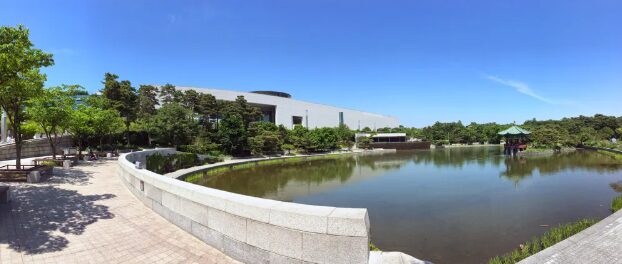
Seoul is a city where ancient palaces, modern towers, mountain views, and quiet gardens sit side by side. At the heart of this cultural landscape is the National Museum of Korea, the country’s leading museum and one of the most important cultural institutions in Asia. Located in Yongsan, it offers a sweeping journey through Korean history, art, archaeology, and everyday life, all within a spacious modern building designed to feel calm, open, and deeply connected to nature.
Discover Seoul’s National Museum of Korea
The National Museum of Korea is the flagship museum of South Korea and a symbol of the nation’s historical and cultural identity. Its collection is vast, with around 1.5 million artifacts in its care and roughly 10,000 items on permanent display. These numbers alone show the museum’s remarkable scale, but they also hint at something more meaningful: only a small portion of its treasures can be shown at one time, making each visit feel like a carefully curated window into a much larger cultural world.
The museum’s roots reach back through a complex history. Korea’s earliest modern museum tradition began with the Imperial Museum opened by the Korean Empire at Changgyeonggung Palace in 1909. Later, after Korea’s liberation on August 15, 1945, the National Museum was established by taking over the former Japanese Government-General Museum, which had opened in Gyeongbokgung Palace in 1915. The National Museum officially opened on December 3, 1945, and over the decades it absorbed and inherited collections connected to earlier royal, colonial, and regional museum institutions.
Before settling in its current home, the National Museum of Korea moved through several major sites that reflected the country’s changing times. It was housed in locations such as the Seokjojeon Hall at Deoksugung, the former National Folk Museum building, the former Japanese Government-General building, and the building now used by the National Palace Museum of Korea. In 2005, it finally moved to Yongsan, where it became not only a museum but also a landmark public space loved by residents, students, families, scholars, and international visitors.
Inside Korea’s Treasure House in Yongsan
The museum is often described as a treasure house of Korea, and the experience inside lives up to that name. Its permanent exhibition halls are organized by period and theme, allowing visitors to move from prehistoric artifacts and ancient kingdoms to Buddhist sculpture, ceramics, calligraphy, painting, and Asian art. The museum also features special exhibitions, guided interpretation programs, a Children’s Museum, educational activities, and immersive digital content that help visitors engage with history through sight, sound, touch, and imagination.
The building itself is part of the experience. Its architectural concept reinterprets the spirit of traditional Korean architecture in a modern way, emphasizing harmony between nature and human-made space rather than decorative excess. Set between Namsan Mountain and the museum’s Reflecting Pond, the structure suggests the calm strength of a protective fortress. Its bold walls, broad open spaces, and natural light create an atmosphere that feels both monumental and peaceful.
The National Museum of Korea has also become one of the world’s most visited museums. Although its ranking has shifted over the years, attendance has grown strongly again since the COVID-19 pandemic. In 2023, the museum welcomed about 4.18 million visitors, setting a new annual record and ranking among the top museums globally that year. For travelers in Seoul, it is more than a place to view artifacts; it is a place to understand the depth of Korean history, the beauty of Korean aesthetics, and the continuing power of culture in everyday life.
A visit to the National Museum of Korea is one of the most rewarding cultural experiences in Seoul. Whether you come for ancient gold crowns, serene Buddhist statues, elegant celadon ceramics, immersive exhibitions, or simply a quiet walk beside the Reflecting Pond, the museum offers a memorable encounter with Korea’s past and present. In Yongsan, history is not kept at a distance—it is opened generously to everyone who wants to see, learn, and feel it.